
Hoyer Says Cubs Doing Organizational ‘Deep Dive’ Following Rash of Pitcher Injuries

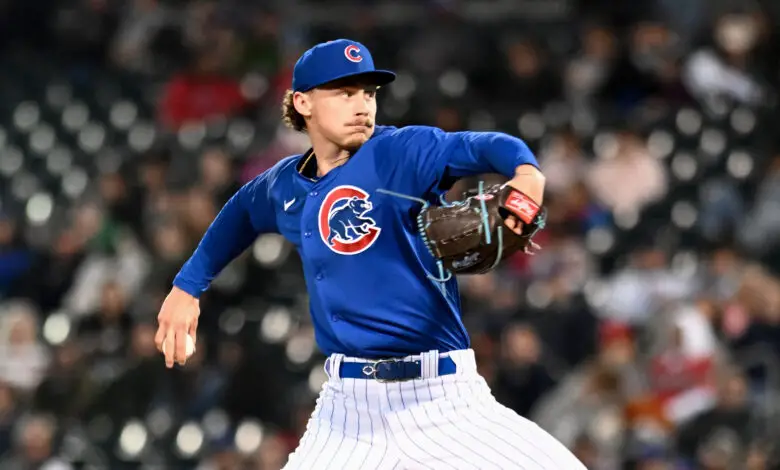
It seems like each day brings word of a new injury to a Cubs pitcher, with news of Porter Hodge‘s season-ending UCL surgery and Jaxon Wiggins‘ elbow inflammation dropping on Wednesday. The long list of casualties has set off alarm bells across Cubdom, and it’s gotten reporters asking questions about the organization’s training and development methods.
“I think you have to take a look because you wouldn’t be doing your job if you didn’t,” Jed Hoyer said in Pittsburgh. “A lot of guys go down these days; guys get hurt, guys throw so unbelievably hard. But yeah, we’ll do a deep dive and see if there’s a commonality to the injuries. I feel like the last couple years coming out of spring training, we haven’t had these issues.
“I think you have to take a look (inside the organization) … we’ll do a deep dive and see if there’s a commonality to the injury.”
Jed Hoyer on the Cubs’ next steps following Porter Hodge’s UCL injury. pic.twitter.com/31Yd3Rcv3a
— Marquee Sports Network (@WatchMarquee) April 15, 2026
“And then all the sudden this year, we’re what, 17 games in, and we have this many injuries. So I certainly hope the pace slows, and hopefully we can…get some of these guys back and start the process of kind of rebuilding (the staff).”
While I’m not privy to everything that goes on with the implementation and execution of training programs, I tend to believe digging deeper will still have the Cubs coming up with lint. A lot of folks want to blame the trainers, the medical staff, or even VP of pitching Tyler Zombro, but the fact of the matter is that this injury epidemic is not confined to one organization.
According to research by baseball analyst Jon Roegele, just over 39% of all MLB pitchers who appeared in a game last season had undergone at least one Tommy John surgery. Both the Tigers and Dodgers employed a record 21 pitchers who’ve had elbow reconstruction, and I’d be willing to bet that mark will be broken within the next two years. This thing is going to get worse, maybe much worse, before it starts to get better.
You see, the issue isn’t just throwing harder and trying to generate nastier stuff. It’s that the chase for velocity begins at earlier ages and features greater workloads with less recovery as specialization becomes the rule rather than the exception. There are preteens being pushed into pitcher-only roles and throwing competitively all year long in some cases, and even those who are playing multiple positions are sometimes doing so without a break.
Gone are the days when each sport had its own season that was not to be infringed upon; kids are playing 2-3 sports at a time, which minimizes recovery. The biggest indicator by far of arm injuries is throwing while in a fatigued state. If you’re playing multiple sports 12 months a year, is there ever a time when you’re not fatigued? Now, I know what some of you are thinking: We’re talking about professionals, not kids.
That’s very true, but today’s professionals used to be kids. The rise in injury rates coincides with the generation that grew up during a surge in club and travel ball that shows no signs of slowing down, so what we’re seeing in many cases is the culmination of chronic damage that began long ago. Though the Cubs and other teams can’t be entirely absolved of culpability, they’re often dealing with damaged goods from the start.
To that end, I do believe there are things the organization can do better in terms of workload management throughout the offseason and into the spring and early portion of the regular season. The Cubs have long been notoriously conservative on the pitching side, and it has handicapped their development of arms for well over a decade. Loosening up a little in terms of evaluation and programming has helped, but I think they’re still employing too much of a governor.
It’s not just acute throwing intensity that creates issues; it’s a spike in workload that exceeds a pitcher’s chronic capacity. Perhaps the Cubs are placing the ceiling a little too low, which causes guys to bang their heads when they’re finally cut loose. And now I’m wandering a little too far into conjecture, even if my speculation is well-informed.
All we can say for sure is that the Cubs have suffered a lot of injuries to their pitchers and must now work to address that in a number of different ways. Fingers crossed that this Wiggins issue is less severe than some fear and that the additional depth Hoyer brings in will work out well.


